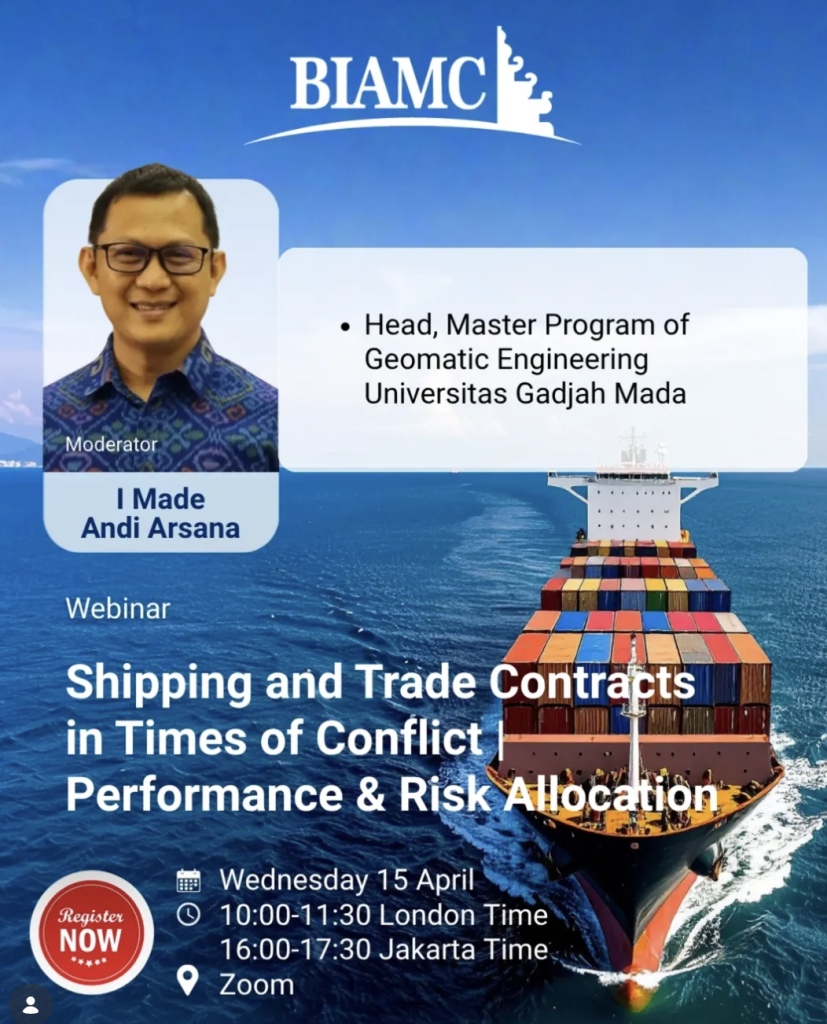
On 15 April 2026, I had the privilege of moderating a webinar organized by BIAMC on Shipping and Trade Contracts in Times of Conflict: Performance and Risk Allocation. The discussion brought together experts and participants from various countries to explore how global conflicts affect maritime trade and contractual relationships.
While shipping contracts may appear to be a niche legal topic, the webinar reminded me that they are closely connected to our daily lives. Much of what we consume depends on goods moving across oceans through complex global supply chains. When conflicts disrupt shipping routes or create uncertainty, the consequences extend far beyond the maritime industry.
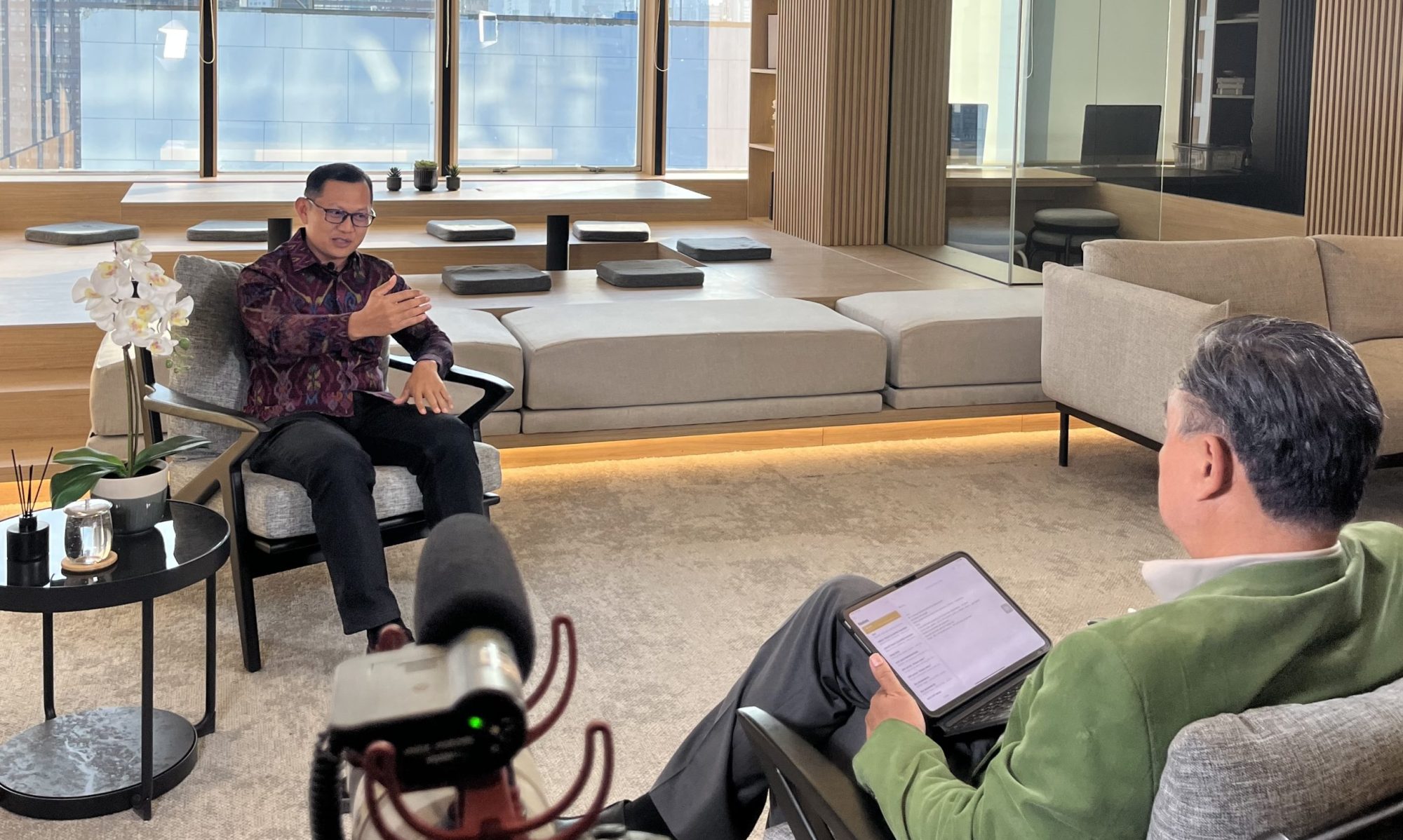
Yogyakarta, 14 April 2026 – It was quite late in Yogyakarta, Indonesia when I started teaching online for those physically located in the United Nations building in New York. The time differences is 11 hours so night in Indonesia is morning in New York, US. Time differences was not an issue, indeed. I delivered my lecture with excitement. I saw, the participants were also paying attention enthusiastically.
I delivered a session on maritime boundary delimitation, focusing on legal and technical aspects. The participants were fellows of the UN-Nippon Foundation Fellowship program, where I was also a participants 19 years ago. It felt great and also surreal at the same time to be asked to teach in a program where once I was a participant. It was certainly an honor.
The fact that I was teaching online from my home in Indonesia to those who are thousands of kilometers away confirms that we indeed live in a borderless world. Interestingly, my lecture was on how to establish borders between countries. It seems like a paradox but not really. Living in a borderless world does not mean that we do not need borders. We still need borders between countries to clarify the limits for rights and responsibilities of each country.
Moreover, we do need borders but permeable ones. We do not need borders that exclude ones from others but the ones that still promote interaction and relationship. If we imagine clearly, we need walls between countries but those walls should be with doors. Through those doors, we can see and visit each other for interaction and collaboration. This is important to stress because we do not live in the era of competition but collaboration.
It was the second year for me to teach in the program. I can tell that they enjoyed our class. They had good questions for me to answer. I hope this is not the end of the story and we will continue the interaction and collaboration. I thank the United Nations for giving me the opportunity. See you again next year!