Plant Today, Protect Tomorrow

On 25 May 2026, I had the opportunity to participate in a mangrove planting program organized by the Postgraduate Students Association of Universitas Gadjah Mada. The event carried a simple but powerful message: Plant Today, Protect Tomorrow.

On a Saturday morning in Jangkaran, Kulon Progo, around 250 participants gathered to plant 1,000 mangrove seedlings along the coast. Students, schoolchildren, environmental communities, government representatives, and local residents worked side by side. At first glance, planting a thousand trees may seem like a small contribution compared to the scale of global environmental challenges. Yet standing on the muddy shoreline that day, I was reminded that meaningful change often begins with actions that appear modest.
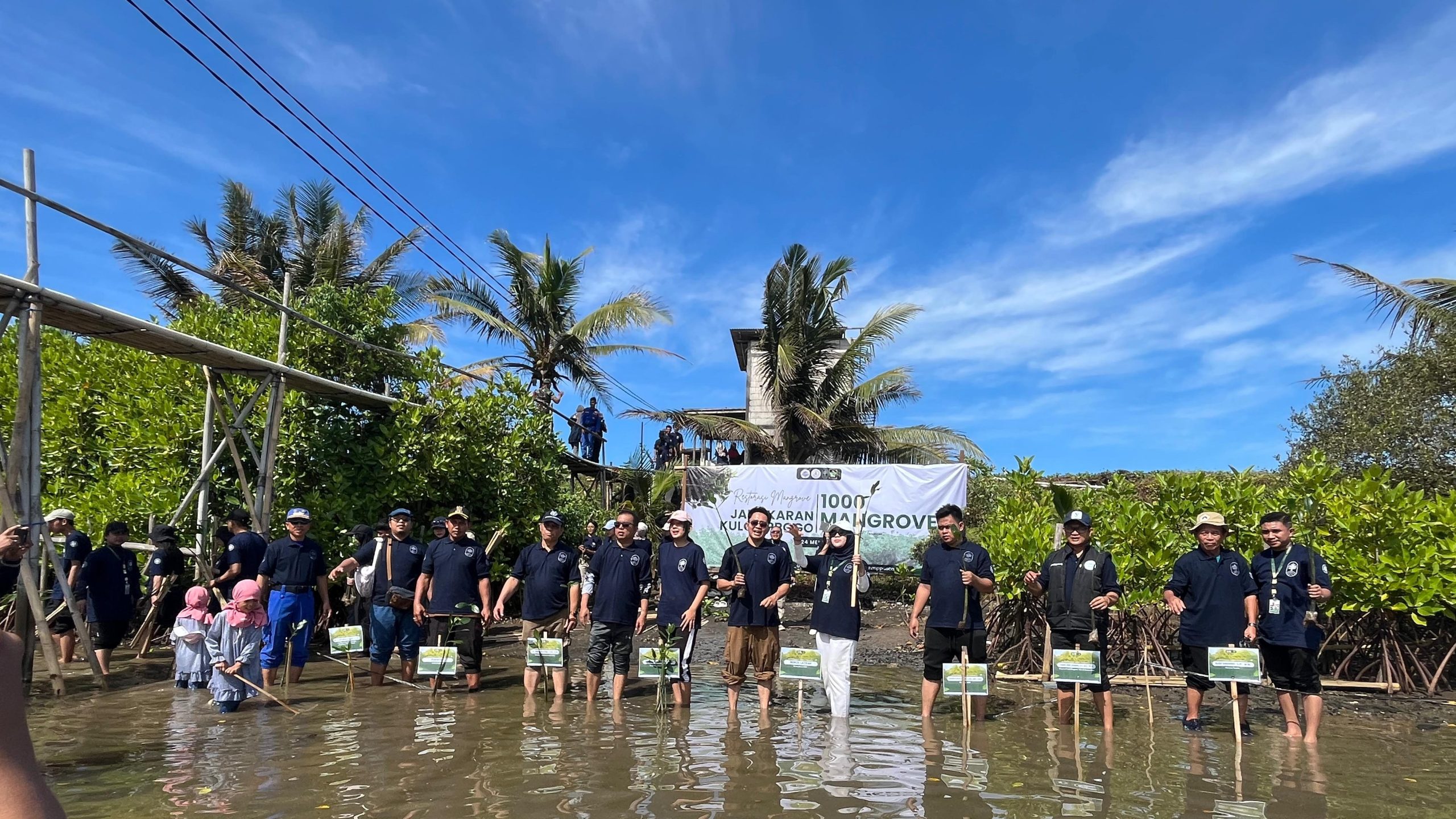
As someone who works in geospatial science, I often encounter environmental issues through maps, satellite imagery, and datasets. We can visualize coastal erosion, monitor land-use change, and quantify the impacts of climate change with remarkable precision. However, environmental stewardship cannot rely solely on technology. Data may help us understand a problem, but collective action is what ultimately addresses it.

Continue reading “Plant Today, Protect Tomorrow”

What Are the Benefits of Sharing Our Ocean to the World?

A few weeks ago, many Indonesians suddenly became interested in the law of the sea and related matters. The trigger was not a new regulation, nor a maritime incident in Indonesian waters. It was the tension surrounding the Strait of Hormuz. As discussions emerged about the possibility of Iran disrupting maritime traffic, a familiar question resurfaced: if Iran can threaten to close Hormuz, why can’t Indonesia do the same with the Strait of Malacca or the Indonesian Archipelagic Sea Lanes (ALKI)?

The question is understandable. Yet it also reveals how easily we are tempted by simple comparisons in a world that is far more complex. I was invited to talk at an event organised by IPB University in Bogor on 13 May 2026. It was on “Managing and Utilizing the Strait of Malacca and ALKI”.

At first glance, Hormuz and Malacca appear similar. Both are strategic straits. Both carry enormous volumes of global trade. Both attract the attention of major powers. However, geography, law, and history tell very different stories.

Continue reading “What Are the Benefits of Sharing Our Ocean to the World?”

Talking to Our Future Change Makers

I have been doing this for more than a decade. It was 2015 for the first time. I was asked to talk to young Indonesians who were preparing their journey to study master and PhD degree with LPDP scholarship. Talking to bright young Indonesia has always been encouraging. Since the first event, I have been doing it for more than twenty times, now.

The last one was on 5 May 2026. I, once again, spoke to hundreds of optimistic young Indonesians who are paving their way to the future. The future of Indonesia. I could feel if from the way they responded to my speech. I could see it from the way they stared at my presentation. I felt the energy.

Continue reading “Talking to Our Future Change Makers”

Shipping, Trade, and Conflict: A Reflection

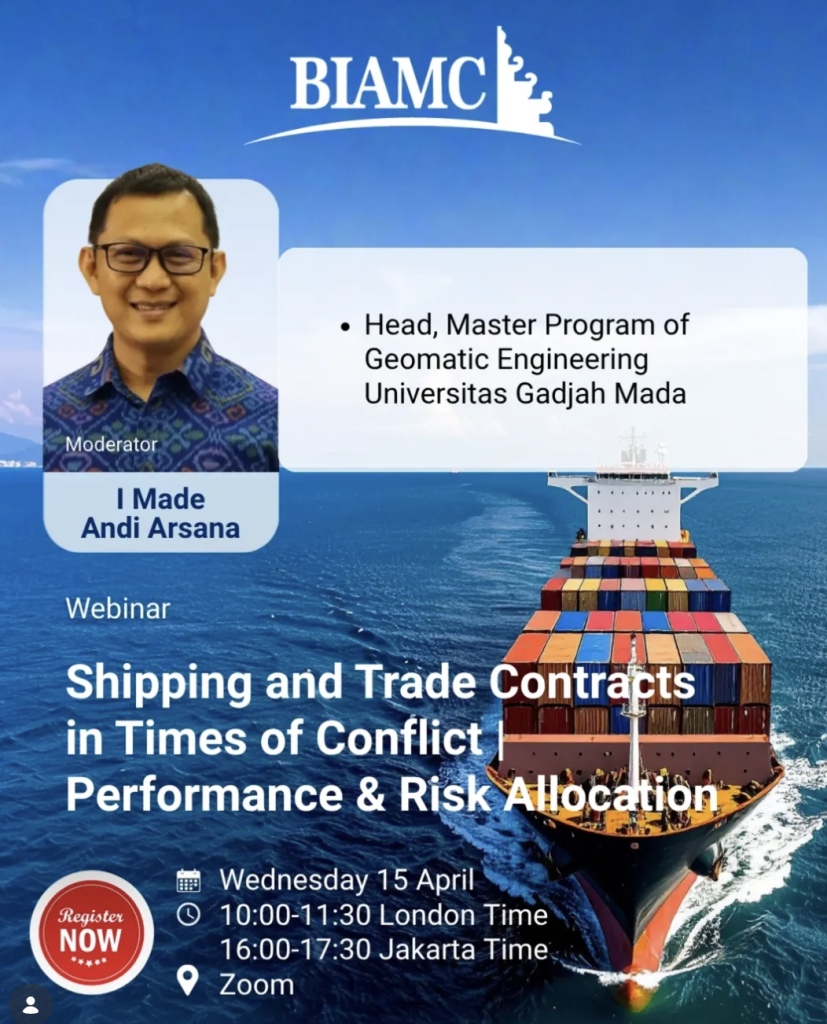
On 15 April 2026, I had the privilege of moderating a webinar organized by BIAMC on Shipping and Trade Contracts in Times of Conflict: Performance and Risk Allocation. The discussion brought together experts and participants from various countries to explore how global conflicts affect maritime trade and contractual relationships.

While shipping contracts may appear to be a niche legal topic, the webinar reminded me that they are closely connected to our daily lives. Much of what we consume depends on goods moving across oceans through complex global supply chains. When conflicts disrupt shipping routes or create uncertainty, the consequences extend far beyond the maritime industry.

Continue reading “Shipping, Trade, and Conflict: A Reflection”

Teaching Borders in a Borderless World for the United Nations-Nippon Foundation Fellowship

Yogyakarta, 14 April 2026 – It was quite late in Yogyakarta, Indonesia when I started teaching online for those physically located in the United Nations building in New York. The time differences is 11 hours so night in Indonesia is morning in New York, US. Time differences was not an issue, indeed. I delivered my lecture with excitement. I saw, the participants were also paying attention enthusiastically.

I delivered a session on maritime boundary delimitation, focusing on legal and technical aspects. The participants were fellows of the UN-Nippon Foundation Fellowship program, where I was also a participants 19 years ago. It felt great and also surreal at the same time to be asked to teach in a program where once I was a participant. It was certainly an honor.

The fact that I was teaching online from my home in Indonesia to those who are thousands of kilometers away confirms that we indeed live in a borderless world. Interestingly, my lecture was on how to establish borders between countries. It seems like a paradox but not really. Living in a borderless world does not mean that we do not need borders. We still need borders between countries to clarify the limits for rights and responsibilities of each country.

Moreover, we do need borders but permeable ones. We do not need borders that exclude ones from others but the ones that still promote interaction and relationship. If we imagine clearly, we need walls between countries but those walls should be with doors. Through those doors, we can see and visit each other for interaction and collaboration. This is important to stress because we do not live in the era of competition but collaboration.

It was the second year for me to teach in the program. I can tell that they enjoyed our class. They had good questions for me to answer. I hope this is not the end of the story and we will continue the interaction and collaboration. I thank the United Nations for giving me the opportunity. See you again next year!

Understanding Indonesia–Malaysia Border Issues Through the Eyes of a Malaysian Scholar

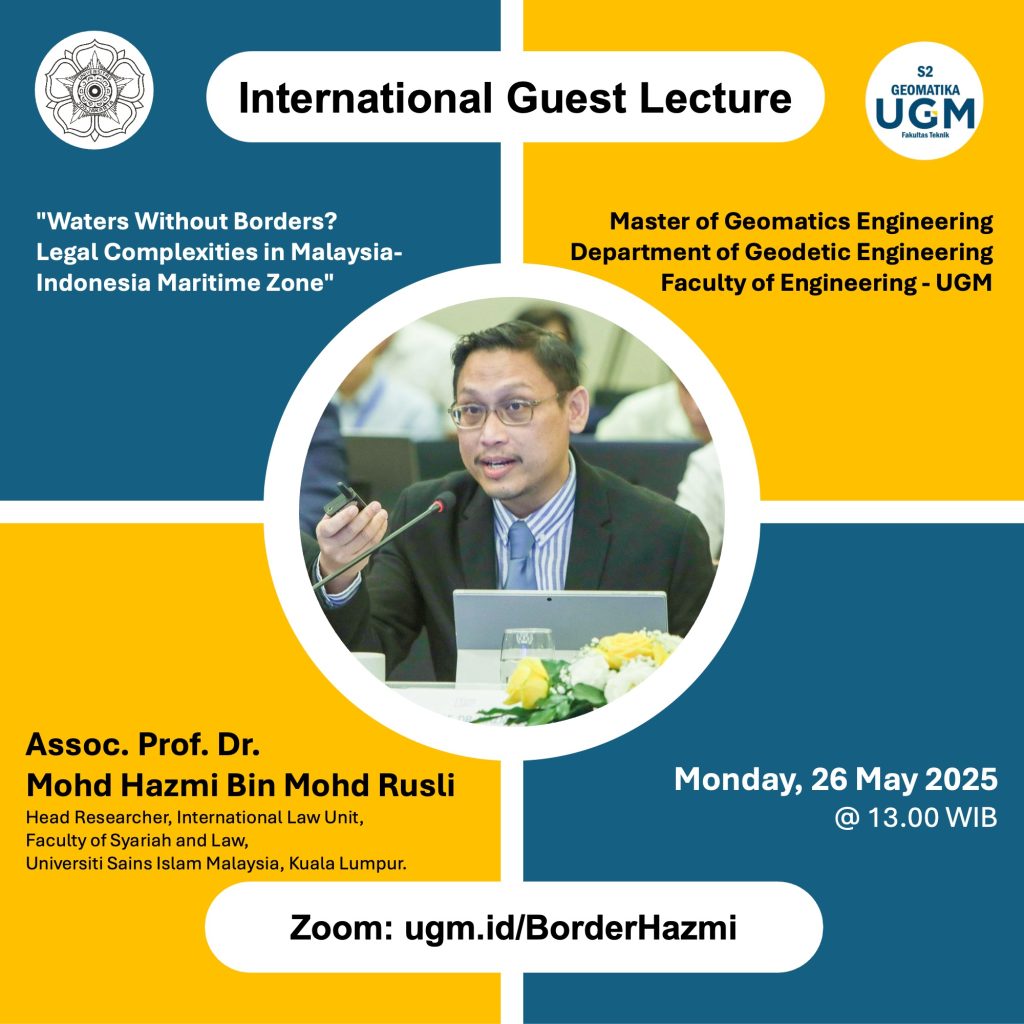
On 26 May 2025, I had the pleasure of welcoming Associate Professor Hazmi Rusli as a guest lecturer in my Master’s course at the Geomatics Engineering Program, Universitas Gadjah Mada. A/P Hazmi delivered a lecture on the complex and often sensitive topic of Indonesia–Malaysia border issues. Though the session was held online, the impact was as strong as if it were in person. I invited him not only as a fellow academic but also as an old friend—I’ve known Hazmi since 2009, back when we were both graduate students at the University of Wollongong. For me, this lecture was more than an academic event; it was a beautiful example of how genuine friendship can evolve into meaningful professional collaboration.

The main audience of this session was my class on Border Management and Maritime Boundary Delimitation, a core course in the Master’s program. Over the past few weeks, we’ve explored theories and frameworks related to border governance. But theory needs grounding, and that’s precisely what A/P Hazmi provided—a real-world view from the Malaysian side of the border. His insights were not only timely but deeply relevant, offering students a richer, more nuanced understanding of what cross-border issues look like in practice.

Continue reading “Understanding Indonesia–Malaysia Border Issues Through the Eyes of a Malaysian Scholar”

Geospatial Sharing with Industry

Educational institutions, like universities, have strong interest for industries to flourish. Without strong industries, education will lose its purpose. How can one convince the society that someone should study in a particular major if relevant industries do not even well developed? Even worse, one will not be interested in studying a particular major if there is no relevant industries. Hence, educational institutions should do their best to support the development of industries.

That was the reason for me to share my geospatial knowledge to employees of PT. Madhava Persada in Yogyakarta. I understand, while the company focuses its services on geospatial field, some employees do not have adequate geospatial background. It is acceptable since each employee has their own role, which might not be directly related to geospatial matters.

I gave a one-hour lecture and the employees paid attention really well. I realize one thing that we, academicians, really need to share our knowledge. Something simple for academician might be that simple for practitioners. It can be an enlightenment. Similarly, academicians also need to listen from practitioners to enrich their understanding, especially to put their knowledge in practical contexts.

In short, academicians and practitioners need to collaborate. Educational institutions need to be hand in hand with industries to support each other.

Judging in the Sleman Beauty Pageant Competition

My childhood was far away from anything like beauty pageant competition. Even if it existed, it had nothing to do with my life. Beauty pageant competition was only something I heard about or accidentally watched on TV. Nothing more than that.

Hence, it came to me as a big surprise when I received an invitation as one of the judges in the Sleman Regency Beauty Pageant Competition. The competition is also known as Dimas Diajeng Sleman. It is something like Mr and Ms Sleman, the regency where I am currently residing.

I hesitated at first but the committee then managed to convince me that my participation is something positive and acceptable. I was asked to assess the level o understanding and familiarity of the candidates on international insight. I guess it was something that I could take part. Hence, I accepted the request.

Continue reading “Judging in the Sleman Beauty Pageant Competition”

Teaching in Kuching

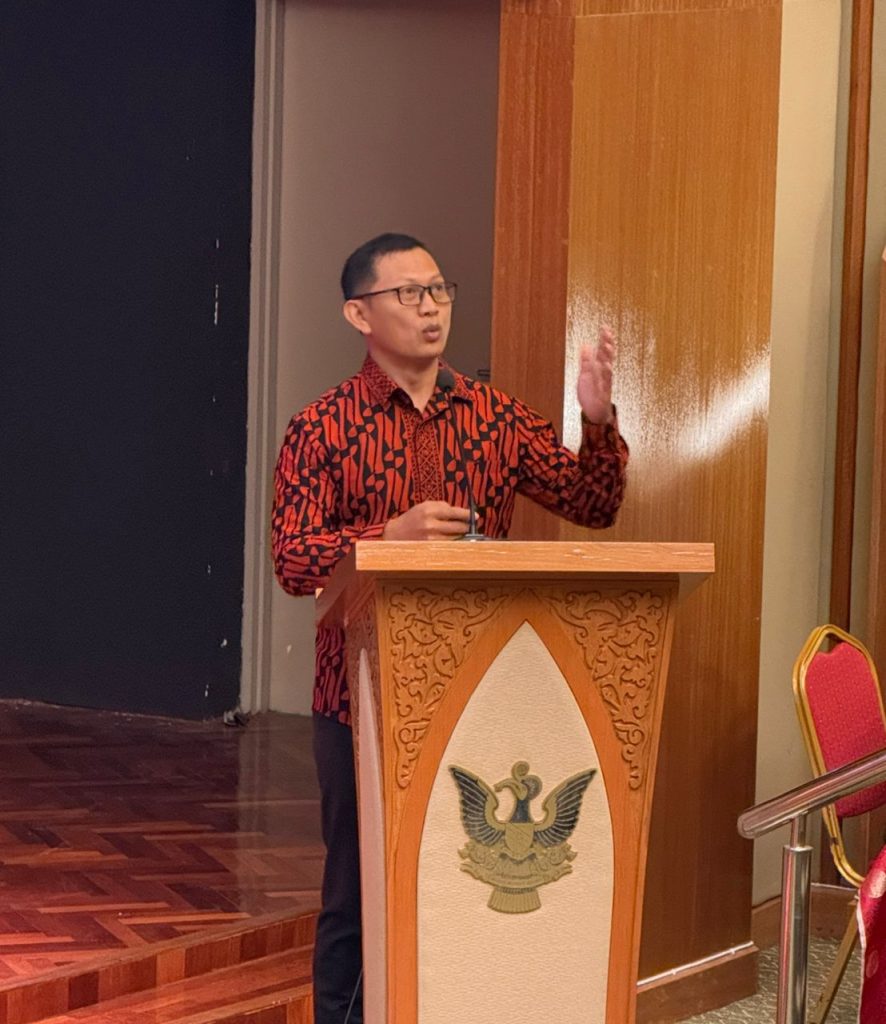
Inside one of Sarawak’s most iconic buildings—the local Parliament in Borneo—I had the privilege of delivering a three-hour lecture on the geospatial and legal dimensions of maritime boundary delimitation. The audience comprised around 50 engaged participants from a diverse range of institutions: the Attorney General’s Chambers of Sarawak, Members of Parliament, the Ministry of Transportation, and other agencies. Their enthusiasm and sharp questions made the session especially rewarding.

The invitation came from Dr. Jady Hassim and Ms Vanessa Jawa, whom I first met in February this year at the National University of Singapore (NUS), when I gave a lecture on baselines and maritime boundaries. Apparently, they found that session valuable enough to bring the same discussions to a broader audience in Kuching. I was honoured.

Continue reading “Teaching in Kuching”

Living in Jogja, Teaching in New York

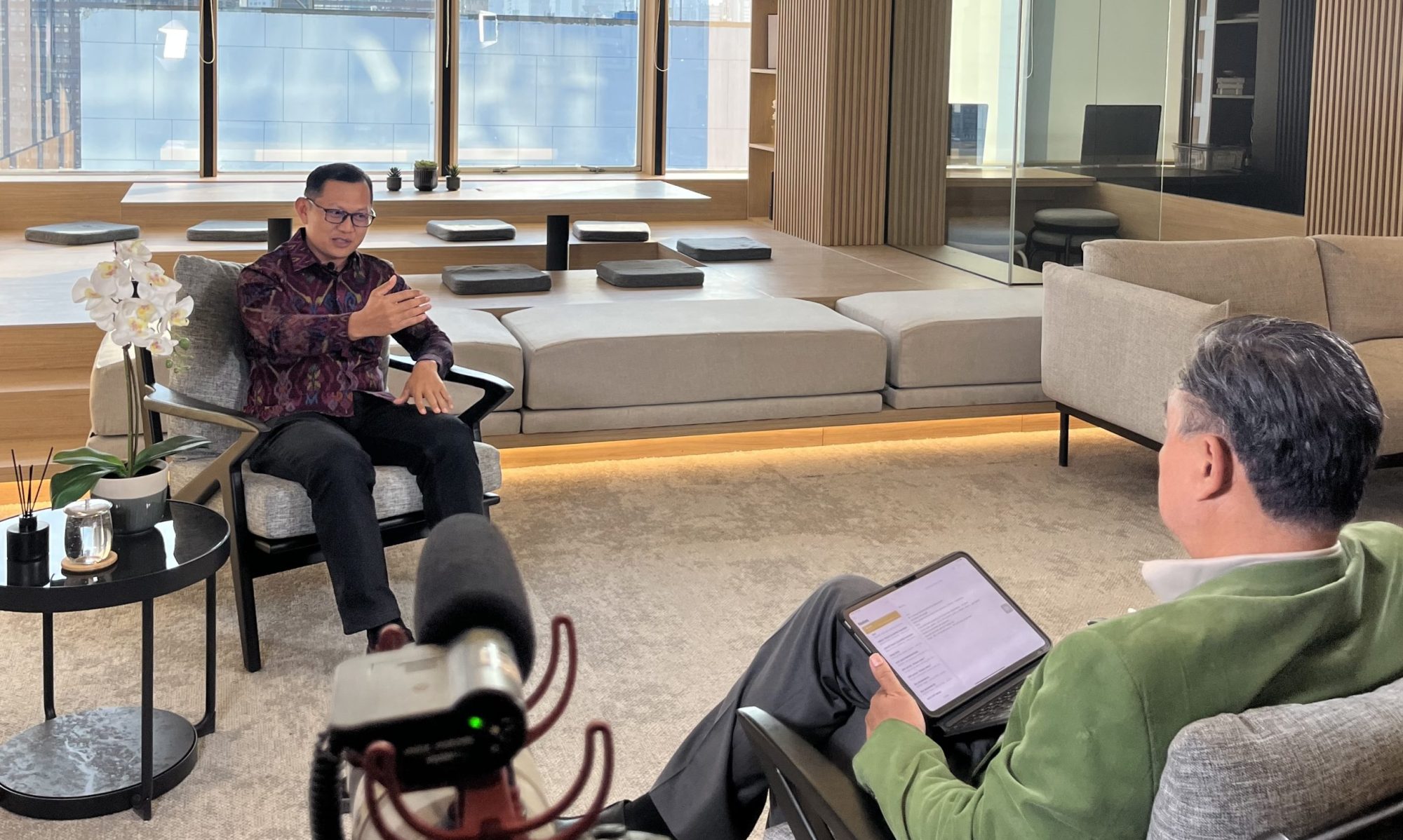
Back in 2007, I taught my first online class from New York. It was around 1 or 2 in the morning—adjusted to match the afternoon class time in Jogja. I used Google Talk back then (what we now know as Google Meet). The students, class of 2004 of the Department of Geodetic Engineering, UGM, followed with great enthusiasm. Online classes were a novelty, back then.

Continue reading “Living in Jogja, Teaching in New York”