
On 25 May 2026, I had the opportunity to participate in a mangrove planting program organized by the Postgraduate Students Association of Universitas Gadjah Mada. The event carried a simple but powerful message: Plant Today, Protect Tomorrow.
On a Saturday morning in Jangkaran, Kulon Progo, around 250 participants gathered to plant 1,000 mangrove seedlings along the coast. Students, schoolchildren, environmental communities, government representatives, and local residents worked side by side. At first glance, planting a thousand trees may seem like a small contribution compared to the scale of global environmental challenges. Yet standing on the muddy shoreline that day, I was reminded that meaningful change often begins with actions that appear modest.
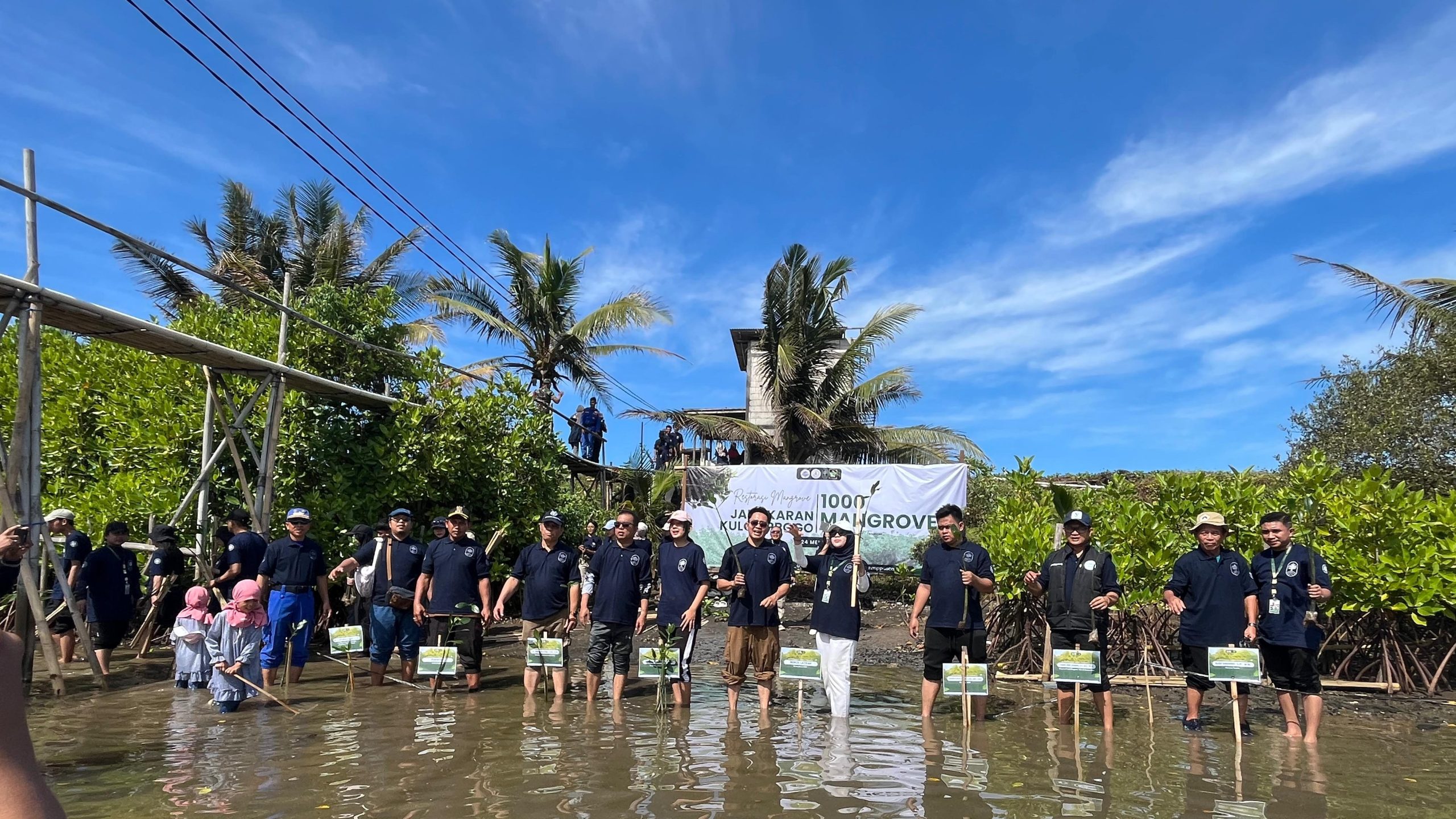
As someone who works in geospatial science, I often encounter environmental issues through maps, satellite imagery, and datasets. We can visualize coastal erosion, monitor land-use change, and quantify the impacts of climate change with remarkable precision. However, environmental stewardship cannot rely solely on technology. Data may help us understand a problem, but collective action is what ultimately addresses it.
Mangroves are a fascinating example. Beyond their role as natural barriers against coastal erosion, they are among the most effective ecosystems for storing carbon. They protect coastlines, support biodiversity, and contribute to climate resilience. In other words, a mangrove seedling is much more than a tree; it is an investment in the future.
What impressed me most during the event was not the number of trees planted, but the diversity of people involved. Environmental challenges do not recognize institutional boundaries, and neither should environmental solutions. Universities, governments, communities, and ordinary citizens all have roles to play. The collaboration demonstrated that sustainability is not merely a policy objective or an academic discussion, it is a shared responsibility.
The slogan Plant Today, Protect Tomorrow resonates because it captures an essential truth. Many of the actions needed to protect our planet will not produce immediate results. We plant today knowing that the full benefits may only be enjoyed years from now. That requires patience, optimism, and a willingness to think beyond ourselves.
Perhaps that is the real lesson from Jangkaran: when we plant a mangrove, we are not only restoring an ecosystem. We are also planting hope.